

Estimations

Price: $39.95$39.95
Add to wishlist
Get 400 VI Points for this purchase.
Estimations - image 1
Click to zoom
Estimations - thumbnail 1
Estimations - thumbnail 2
Estimations - thumbnail 3
Estimations - thumbnail 4
Estimations - thumbnail 5
Estimations - thumbnail 6

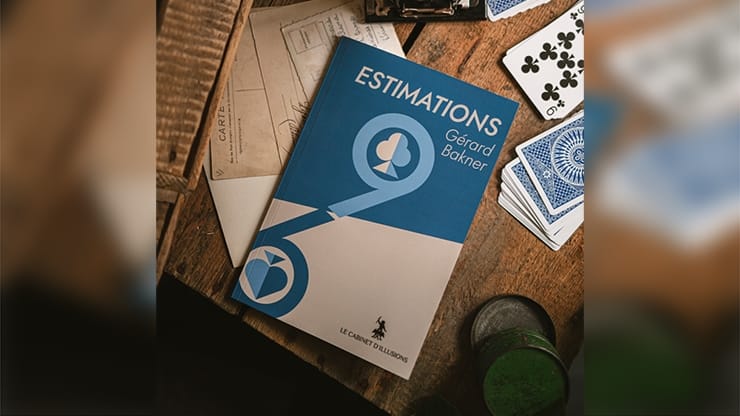
This one-of-a-kind booklet explores a simple, yet devious, principle that allows you to accurately determine the number of cards in a pack cut by your participant (without you ever touching it).

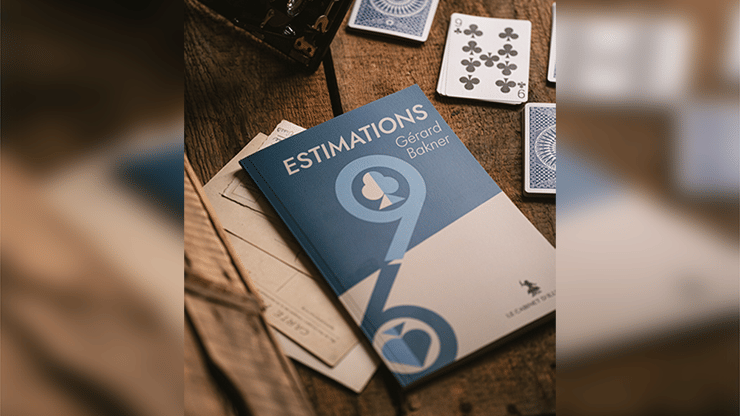
Estimations is a remarkable booklet created by the talented Gérard Bakner. You'll learn how to perform several effects using this straightforward, yet highly effective method!

Here's the effect as presented:

The magician's back is to the audience. The participant takes the deck out of its case and places the deck and case on the table. The participant lifts part of the deck and counts the number of cards lifted.

A few cards are removed from the lifted area and placed back on the deck.The remaining cards are returned to the case. The magician cannot know the number of cards currently on the table, nor the number of cards in the case. You can, however, reveal these two numbers exactly.

Featuring a foreword by Father Alex, Estimations by Gérard Bakner is the unique card magic booklet you've been looking for. Get your copy today!

Add to wishlist

Customer reviews for Estimations

David
I added this book to my Birthday list a couple of weeks or so but couldn't fight the urge any more so I grabbed it. This book takes a familiar principle and juices it with steroids. Absolutely love this book. And yes it's in English.
Nicolas
Nice little booklet written by the french conjuror Gérard Bakner, but the booklet is in English.It is based on a subtle principle which will enable you to realise surprising cards tricks. This principle is well explained, and the main routine using this principle is well described. And you will be able to create your own routines.
Jose
I disagree with Nicolas’ review that the main routine is well described. It is not. The method is indeed described (and it is an old and well known method, with a couple of subtleties added), but the presentation is missing; after asking the spectator to lift some cards, there is no justification to get them to do math and remove a specific number of cards from that packet; when asking the spectator to guess a page number, there is no justification to have the spectator do math to alter the number they have just guessed. If the performer claims they can tell the amount of cards in a packet, or if the performer states that the spectator can guess at which page a post-it is placed in a book, why would we add so many constraints? Why can’t the performer just say how many cards were taken, and why does the spectator “guess” the page number but then we need to do math on that number? That is not addressed in this book. If the author is indeed successful with these presentations, those details have been left out. The book gives food for thought, but it does not provide a complete routine. Aside from that, the book is really poorly edited; several words go into the book binding and aren’t readable, multiple sections have names that don’t match the ones in the index, several pages have the wrong number, some pages are not numbered at all (in some cases, the page numbers account for them; in others, they skip those pages), and there are several other issues (as examples, there are two pages 47 and quite a few items in the index are listed with the wrong page number, typically off by one or two pages). On top of it all, I don’t feel the book was properly translated/adapted from the original French. I know that “et” means “and”, but I’m not entirely sure what “borrowing a game” means (borrowing a deck, probably, but why do I have to guess these things?). And why tell me that I’ll recognize a historical quote and then give me something said by Charles de Gaulle about France that I can't possibly relate to?